Home-Improvement:Interior-Design-and-Decorating Articles

Home-Improvement:Furniture Articles

Home-Improvement Articles

Showing posts with label bayeux cathedral. Show all posts

Saturday, April 25, 2009

Cumbrian Church’s History Sewn Up In New Tapestries

Cumbrian Church’s History Sewn Up In New Tapestries

Friends of a 400-year-old Cumbrian church have history all sewn up with tapestries to chart the building’s journey through the ages.

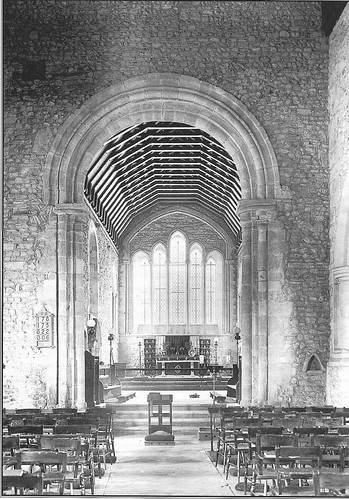
Longtown’s Arthuret Church – also known as St Michael and All Angels Church – is one of the oldest in the Diocese of Carlisle.

The tapestries are the latest in a year-long programme of 400th anniversary celebration events and were mounted on the church walls on Saturday when a special blessing was carried out.

Tapestry co-ordinator Christine Batey, of Oakshaw Hill, Longtown, said: “There are four tapestries now hanging on the wall of the church which have been made by about 40 friends of the church and other local people.

“About 40 people were involved and it has taken about 18 months to complete so it was quite a task to co-ordinate them all.”

Mrs Batey added: “I am really pleased with the way it has turned out, it has surpassed my expectations. The tapestries will hang in the church for years to come and I hope they will be admired by my grandchildren when they grow up.”

The Church of England church is led by The Rev Russell Tague and the Most Reverend Dr Idris Jones Primus.

It is now part of the benefice of three churches, St Michael and all Angels, Longtown; St Andrew, Kirkandrews-on-Esk; and St Nicholas, Nicholforest.

Between them they cover an area from the Scottish border to north of Carlisle.

The building, which dates back to 1609, has a long and important history which started with James VI of Scotland and the unruly Border Reivers.

The people of Longtown are marking the anniversary with a long programme of events, which started last November.

A flower show is planned for the summer. The theme will be the thistle and the rose to mark the ancient cross border connections of the church.

Taken From Cumberland-News.co.uk

Sunday, July 13, 2008

The Bayeux Tapestry - A Brief History

The Bayeux Tapestry - A Brief History

Certainly one of the most magnificent embroidered works in all of history, the Bayeux Tapestry is 20 inches tall and 230 feet long. Through its many panels, it tells the story of the events surrounding the battle of Hastings, which took place on Oct. 14, 1066.

It was there that the Norman Conquest unfolded. On the one side the Anglo-Saxons, led by Harold Godwinson, recently crowned the King of England. Pitted against his army were the Normans, led by William the Conqueror. Even today, you can tell who is who in the tapestry. The Normans are shown with their heads shaved while the Anglo-Saxons have mustaches.

Amazingly, the Bayeux Tapestry contains the images of more than 600 humans, 35 dogs, some 200 horses, 41 ships, 500 other animals and 2,000 words in Latin.

Technically, the Bayeux Tapestry is not really a tapestry at all. The original was embroidered, not woven. But that doesn't affect its value to historians and art lovers in the least.

The tapestry is believed to have been commissioned by William's half brother, Bishop Odo of Bayeux and was to be displayed in the Bayeux Cathedral to commemorate his brother's bold victory. The tapestry was first mentioned in 1476 in an inventory of the cathedral. Two missing panels are believed to have shown William ascended to the throne of England.

The Bayeux Tapestry remained in the cathedral from more than 400 years, and then little is known of it for the next 300. The masterpiece almost ended its days as a cover for goods on a wagon. During the French Revolution, there was a serious shortage of cloth and a villager remembered there was some old cloth in the church. Lambert Leonard Leforestier saw what was happening and offered his own cloth as a trade for the priceless cathedral tapestry.

At one time, it was believed that Napoleon had used the tapestry to plan his own invasion of England. He had had the Bayeux Tapestry removed from the cathedral at one point and transported to Paris.

A replica of the tapestry is on display at the Museum of Reading in England. The brainchild of Elizabeth Wardle, a skilled embroiderer, she began her effort to reproduce the work after visiting the original in 1885. She felt strongly that England should have its own Bayeux Tapestry.
Thirty-five members of the Leek Embroidery Society completed the replica in a year.

As a nod to the morality of the Victorian era, the Museum of Reading reproduction has a naked figure that is in the original covered with clothing to cover his privates. Otherwise, the two works are almost identical.

Today, the original Bayeux Tapestry has been returned to its rightful home, the Bayeux Cathedral. There, it is proudly displayed in the village of Bayeux in Normandy, France and is open to tourists.

Individual panels and sections of the Bayeux Tapestry have been reproduced for home display as well. Chronicling specific key events within the battle, each tapestry is a faithful reproduction of the original and allows homeowners the chance to not only bring a magnificent work of art into their home, but a piece of European history as well.

Want impressive wall art for your home? Then see this fine collection of the latest tapestry wall hangings for ideas to inspire your imagination. Tom Matherson writes for Worldwide Tapestries where you can find a superb range of medieval tapestries and wall decor and other art tapestries to decorate your home.

by Tom Matherson